01
Slow
We don't run drops. A piece is added when it's right and stays as long as it sells. Our smallest run last season was 14 garments. Nothing is mass-produced.
Expozay began in 2024 with a single question: what would a wardrobe look like if every piece was made to last ten years and repaired without charge for two? This is what we've built so far.
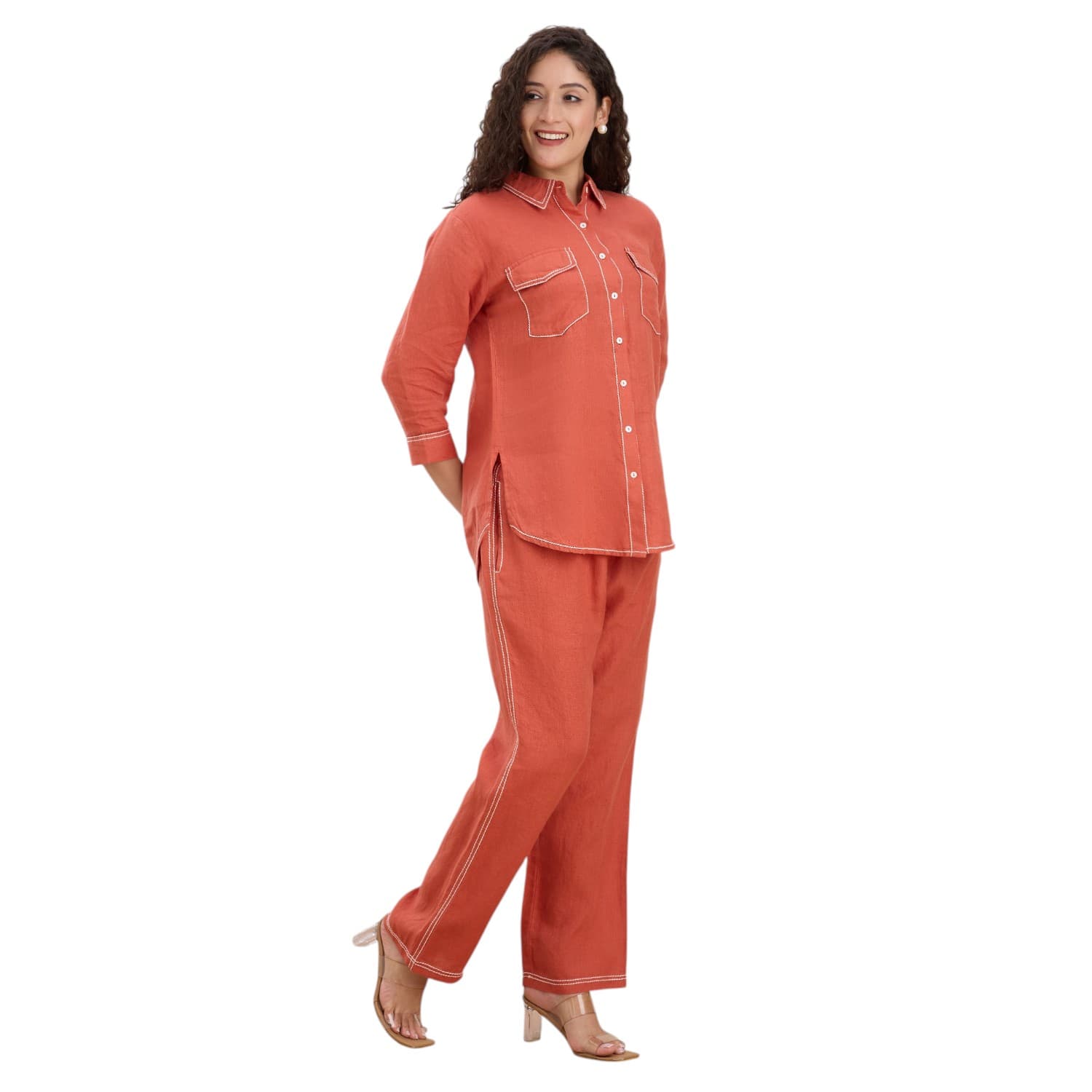
Expozay is built around one material done right. Every piece in our collection — from our co-ord sets to our tunics and corsets — is made from 100% pure linen. We source premium linen yarn, weave in-house, and produce a tightly edited range each season.
We are already established offline, with strong retail presence and distribution across Mumbai, Gujarat, and India. When you compare us to any premium linen brand in the country, our quality holds — and our pricing reflects that honesty.
The yarn is sun-dried for three days before it goes on the loom. Each metre of fabric takes about ninety minutes; a single weaver makes around four metres a day. There is no machine that does this faster while still feeling like our cloth.
After weaving, fabric is washed in spring water, rinsed twice, and beaten on stone. That softness you feel on day one is the result of a wash; it isn't a finish, it's just how linen wants to be.

“The cloth knows when you are in a hurry. So you do not hurry.”
We don't run drops. A piece is added when it's right and stays as long as it sells. Our smallest run last season was 14 garments. Nothing is mass-produced.
Linen, only linen. No blends, no coatings, no synthetic linings. The yarn is grown, woven, dyed, and finished within a 200-kilometre radius in Andhra Pradesh.
We list every cost: the yarn, the loom hours, the wage, our margin. The price is what it costs to make plus enough to keep the workshop's lights on.
There are eleven of us. A founder, a co-founder, two pattern cutters, four weavers, two finishers, and one logistics lead. Everyone earns above the state minimum, gets a share of the year, and has the right to say no to a deadline.
We don't subcontract. If you order a piece on Wednesday, someone we have eaten lunch with will cut it on Thursday. That isn't a marketing line, it's the operational constraint we built the company around.

That's all of it. The shop is just the front of the workshop.